Hinduism, often described as a religion of many gods, holds a deeper and
more nuanced theology: the idea of one supreme consciousness embodied
through many forms. This concept, while fascinating, can initially be
confusing, especially for those accustomed to viewing religious systems
through a binary lens of monotheism or polytheism. Historically, Hinduism
has often been mischaracterized as a polytheistic religion, but a closer look
reveals it as a henotheistic culture, where the worship of many deities is
rooted in the recognition of one ultimate reality, Brahman.
The Supreme Consciousness: Brahman and Its Manifestations
At the heart of Hindu philosophy is Brahman, the supreme, formless, and
infinite consciousness. Brahman transcends human understanding but may
manifest as avatars or deities to inspire and guide individuals on their
spiritual journeys. These manifestations make the divine accessible to
human perception and devotion, especially for those who have not yet
attained enlightenment.
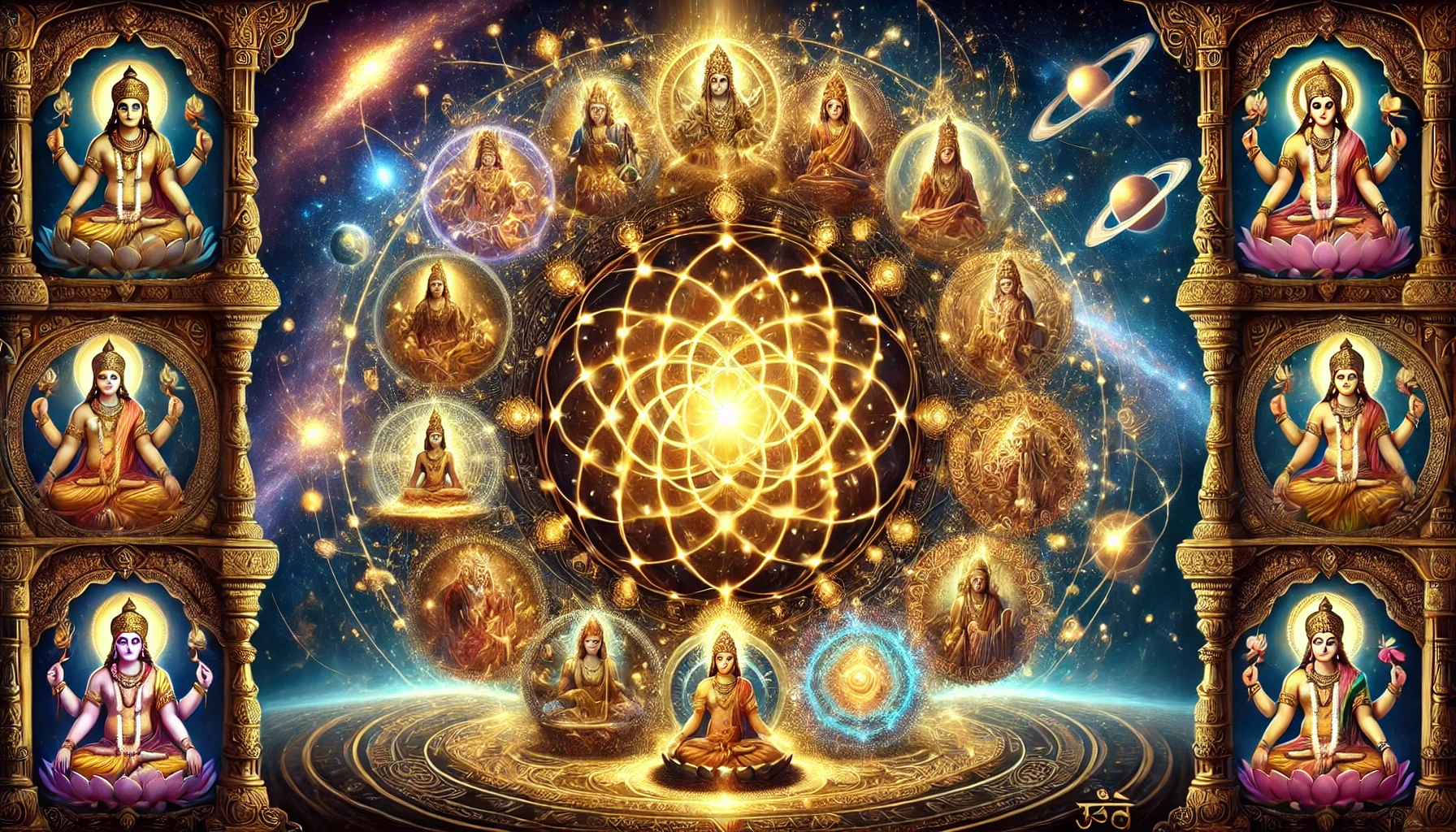
Hindu gods and goddesses represent different facets of Brahman. Some
deities symbolize universal principles or natural forces, echoing the Vedic
tradition of devas as embodiments of natural phenomena. Others reflect
human virtues and vices, serving as archetypes for moral and ethical
reflection (Das, 2019). Many Hindus choose a personal deity for worship,
known as ishta devata, while recognizing that this chosen deity is also an
expression of Brahman. Through this practice, they engage with various
aspects of the divine, ultimately connecting to the singular reality of
Brahman.
In this sense, Hinduism is both a religion of many gods and one God—a
theological paradox that celebrates diversity within unity.
Henotheism Beyond Hinduism: Universal Roots
The concept of henotheism is not unique to Hinduism. Historical parallels can
be drawn to Ancient Egypt, particularly during the reign of Akhenaten.
Akhenaten’s worship of the sun disc, Aten, is often regarded as one of the
earliest forms of monotheism. However, this practice also acknowledged
other gods as extensions or aspects of Aten’s singular divinity (Redford,
1976).
Later, in the Christian tradition, medieval philosophers discussed the idea of
angels and other divine beings as facets or messengers of the one God.
Similarly, Islamic theology, while firmly monotheistic, describes 99 names or
attributes of Allah, each reflecting a unique aspect of the divine.
These examples illustrate that the interplay of unity and diversity in divinity
is a common thread in human spirituality. Many religious traditions, including
Christianity and Islam, implicitly embrace aspects of henotheism in their
understanding of the divine.
Bridging the Divide: Lessons from Henotheism
Hinduism’s approach to divinity challenges the rigid dichotomy of
monotheism versus polytheism. By embracing the coexistence of many gods
and one supreme consciousness, it offers a model for understanding the
complexity of the divine and its relationship with humanity. This inclusive
perspective can foster a deeper appreciation for the diverse ways in which
different cultures and religions conceptualize their relationship with the
sacred.
As we explore these traditions, it becomes evident that the divine cannot be
confined to a single definition. Instead, it reflects the boundless creativity
and interconnectedness of the human experience.
Das, S. (2019). Hindu Gods and Goddesses. Learn Religions. Retrieved from
Learn Religions.
Das, S. (2019). Symbolism of Hindu Deities Explained. Learn Religions.
Retrieved from Learn Religions.
Redford, D. B. (1976). The Sun-disc in Akhenaten’s Program: Its Worship and
Antecedents. Journal of the American Research Center in Egypt, 12, 43–50.
Retrieved from JSTOR.